
Dynamics 365 roadmap publishing is changing, but regular product updates are not going away
Microsoft is changing how it communicates what is coming next for Dynamics 365, Power Platform, and Microsoft Dataverse. Starting in September 2026, newly committed roadmap content will move to the AI at Work roadmap, replacing the twice-yearly release wave 1 and release wave 2 roadmap publishing model.
Instead of waiting for a large release plan twice a year, Microsoft will add capabilities to the roadmap as plans are committed and ready to share.
Microsoft is changing how it publishes roadmap information, not eliminating established Dynamics 365 product update schedules.
Dynamics 365 and Power Platform products will continue to receive updates according to their existing product-specific models. What is going away is the large release wave document that traditionally brought upcoming features together at predictable points during the year.
Microsoft announced the Dynamics 365 and Power Platform roadmap change on August 25, 2026. Release Planner is scheduled to retire by November 15.
What is changing with the Dynamics 365 AI at Work roadmap
Beginning in September 2026, newly committed Dynamics 365, Power Platform, and Dataverse capabilities will be published continuously in the AI at Work roadmap. Microsoft has confirmed that it will not publish a September 2026 release wave 2 announcement or release plan.
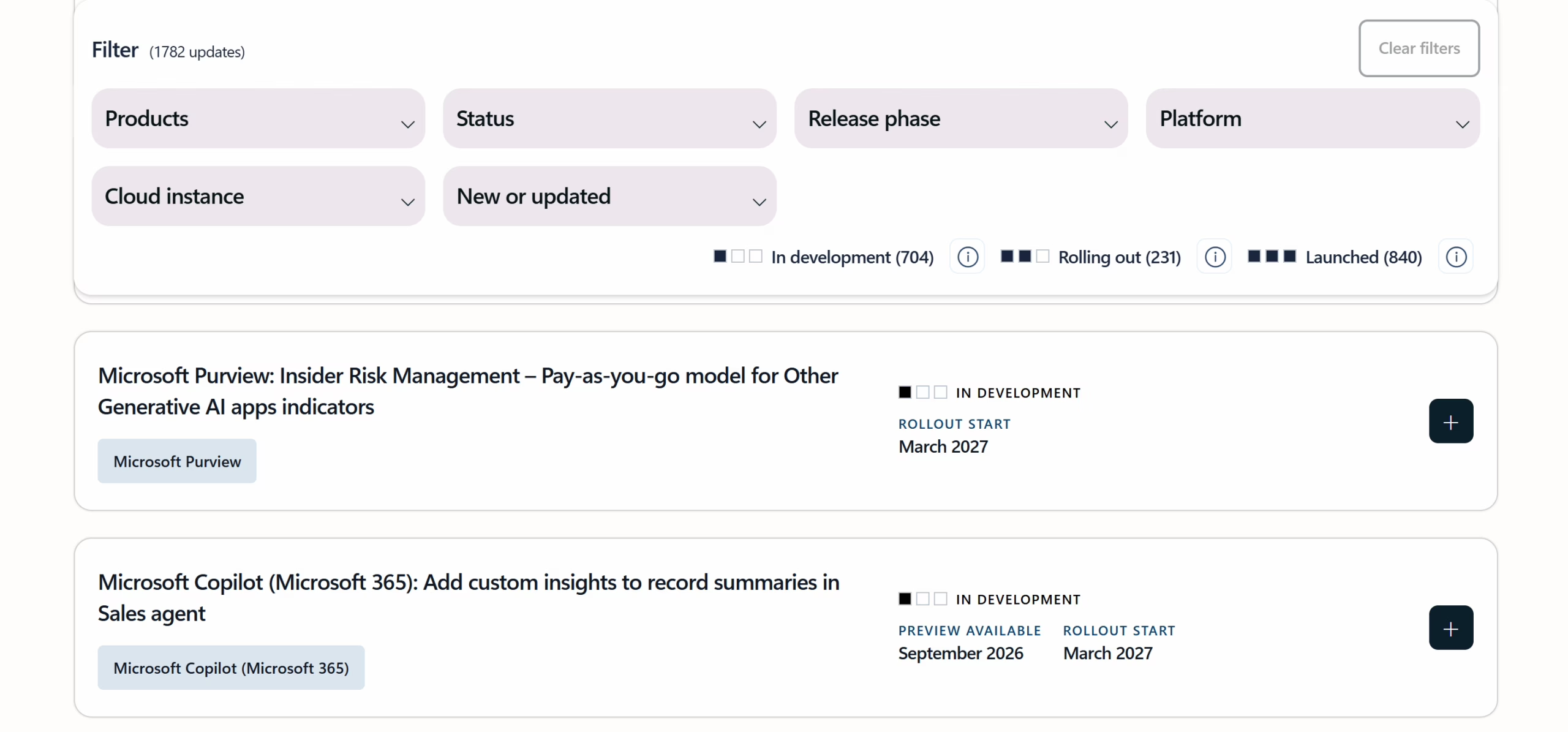
Roadmap items will move through three stages:
- In Development: Microsoft is actively working on the capability.
- Rolling Out: Deployment has started but may not yet have reached every customer.
- Launched: The planned rollout has been completed.
Status and rollout information can be updated as plans develop, allowing customers to follow individual capabilities from development through deployment.
The AI at Work roadmap will also bring Dynamics 365 and Power Platform roadmap information together with Microsoft 365, Copilot, Copilot Studio, and other Microsoft technologies.
For organizations using several parts of the Microsoft ecosystem, this creates a more consolidated view of upcoming capabilities across connected applications and services.
What is not changing for Dynamics 365 product updates
The end of release wave plans should not be interpreted as the end of regular Dynamics 365 updates.
Microsoft’s announcement separates the roadmap publishing change from how products are released and deployed. Products with established update schedules will continue to follow those schedules, although the model differs by product family.
Customers will therefore still need to maintain the testing, validation, change management, training, and deployment processes appropriate to the products they use.
Key dates for the Dynamics 365 roadmap transition
Microsoft will phase in the new roadmap experience between September and November 2026.
Not every historical roadmap item will move. Roadmap entries with public preview or general availability dates before June 1, 2026 will remain in existing release plans for historical reference. Previously published plans, including the Dynamics 365 CRM 2026 release wave 1 and Dynamics 365 Business Central 2026 release wave 1, will remain useful records of the final release wave cycle.
What continuous roadmap publishing means for Dynamics 365 customers
For customers, the biggest operational change is that roadmap monitoring will become a more continuous part of planning. Release wave 1 and release wave 2 provided two predictable points each year to review Microsoft’s plans. With capabilities now appearing throughout the year, organizations will need to monitor the AI at Work roadmap more regularly for new commitments, timing changes, and rollout progress.
That continuous monitoring does not replace normal product update planning. Customers will still need to follow the established update model for each Dynamics 365 and Power Platform product they use, including testing, validation, change management, user communication, and deployment activities.
The practical shift is from twice-yearly roadmap review plus product update management to continuous roadmap monitoring plus product update management. Teams will need to manage both responsibilities in parallel.
Microsoft is providing tools to support that process. Organizations can filter the AI at Work roadmap by product, export roadmap data to CSV, subscribe to updates through RSS, share filtered views, and search by feature ID.
Message Center will continue providing tenant-specific change notifications, while Microsoft Learn remains the source for product documentation and implementation guidance. The AI at Work roadmap will provide the broader public view of Microsoft’s planned product direction.
How to prepare for the new Dynamics 365 roadmap model
Organizations should begin adjusting their planning processes before Release Planner retires on November 15.
Teams should identify which Dynamics 365, Power Platform, and Dataverse products they need to track, create relevant filters in the AI at Work roadmap, and establish a regular internal review. Depending on how quickly an organization adopts new capabilities, that review may take place monthly or quarterly.
RSS subscriptions can also help teams monitor roadmap additions and changes between formal reviews. Existing testing calendars, sandbox validation, change management, user communication, and deployment planning should continue based on the update requirements of each product family.
Teams that currently rely on My Release Plans also have a migration task. Personalized saved views will not carry over when Release Planner retires, and Microsoft does not currently provide the same personalized saved-view experience in the AI at Work roadmap.
Organizations should document important saved views before the retirement date and review bookmarks, internal documentation, procedures, and shared links that point to Release Planner or the existing release plans library.
Companies with more complex Dynamics environments may also want to assign responsibility for ongoing roadmap monitoring so ownership is clear across product administrators, IT teams, and business stakeholders.
What Dynamics 365 customers should do next
Microsoft’s move to the AI at Work roadmap ends the familiar twice-yearly release wave planning document, not regular Dynamics 365 product updates. The change means organizations will need to follow Microsoft’s roadmap more continuously while continuing to manage the update requirements of the Dynamics 365 and Power Platform products they use.
Customers should use the transition period to establish a regular roadmap review process and prepare for the retirement of Release Planner. Organizations that need help connecting roadmap monitoring with product-specific release management can work with an experienced Dynamics 365 implementation partner to establish a repeatable planning approach.
Keep checking back with Dynamics101 for the latest news, independent analysis, and expert perspective across the Microsoft Dynamics and Power Platform ecosystem.

