
What finance and supply chain teams need to know about version 10.0.49, the first fall update without a release wave plan
Microsoft has made version 10.0.49 of Dynamics 365 Finance and Dynamics 365 Supply Chain Management generally available as the fall 2026 service update for Dynamics 365 Finance & Operations. The release became available for self-update in September 2026 and moves to auto-update in October 2026, so most organizations that have not paused their updates are running it already or will be shortly.
Because Microsoft has moved Dynamics 365 roadmap publishing to the AI at Work roadmap, there is no Dynamics 365 Finance & Operations 2026 release wave 2 plan, which makes the version 10.0.49 release notes the clearest record of what has arrived this fall. The new capabilities concentrate on budget control, cash and bank management, electronic reporting, master planning, and warehouse operations.
Dynamics 365 Finance
Budget control and budgeting workflows
Budgeting receives more new functionality than any other Finance module in this release, with most of it aimed at organizations that run budget control on purchasing documents, including public sector entities.
Key updates include:
- Automatic accounting date advancement: When a fiscal period is closed or put on hold while a budget-controlled purchase requisition or purchase order is still moving through workflow, the system can now shift the accounting date to the next open period in the same fiscal year. It then re-runs the budget check against the new date, so requisitions can continue through to purchase order creation and stay visible in budget reservation reporting rather than stalling at period-end.
- Automatic posting of general budget reservations: Budgeting workflows can now include an option to post general budget reservations automatically once approval is complete, which removes a manual posting step for teams processing reservations in volume.
- Detection of corrupted budget tracking data: A new diagnostic in the budget control data maintenance tools identifies budget-controlled documents affected by orphaned tracking records or broken links between commitments and the documents that relieve them. Teams can detect these problems first and then repair them with the existing source document reprocessing tools.
- Cleaner year-end encumbrance reporting: The Outstanding encumbrance report can now exclude transactions posted to closing periods, giving budget-controlled organizations a more complete picture of open commitments at year-end.
- Persistent budget check indicators: A new parameter keeps budget check indicators visible after documents such as partially invoiced purchase orders or partially consumed general budget reservation lines are finalized, so users can still see that budget consumption occurred.
All five budgeting features are enabled through Feature management.
Cash and bank management and payment settlement
The cash and bank management updates focus on reducing the friction between payment posting, settlement, and reconciliation, particularly in high-volume environments. These features are enabled by system administrators rather than through Feature management.
Key updates include:
- Delayed settlement from journal posting: Customer and vendor payment journals can now post successfully even when the related settlement cannot be completed at that moment. The payment posts immediately, and the settlement is queued for processing either automatically in the background or manually from a dedicated page.
- Preview of automatic bank reconciliation matches: Finance teams can review and approve the results of reconciliation matching rules before transactions are posted and marked as matched, which helps catch incorrect matches before they need to be reversed.
- Automatic clearing of bridged payments: Bridged payment transactions created through centralized payments can now be cleared through the bank reconciliation framework.
- Faster bridge transaction selection: During bank clearance, users can filter by bank account, customer or vendor account, payment reference, check number, and date range before transactions load, rather than retrieving every available bridge transaction first.
In accounts receivable, a new parameter lets organizations calculate customer prepayments at the line level instead of the header level. The parameter is available only when the Prepayment customer invoice feature is enabled.
Fixed assets and reporting currency
Fixed assets updates in this release center on reporting currency accuracy, an area that matters most for multinational organizations reporting in more than one currency.
Key updates include:
- Reporting currency adjustments for fixed assets (preview): Organizations can generate, review, and post reporting currency adjustment entries for fixed assets.
- Reporting currency on asset splits: When a fixed asset is split, the exchange rate information from the original asset now carries forward so reporting currency values remain consistent.
- India income tax depreciation in reporting currency: Depreciation proposals for India now calculate and display reporting currency amounts based on configured exchange rates. This feature cannot be enabled while unposted journals or posted fixed asset transactions carry a zero reporting currency amount, so affected organizations may need to clean up historical data before turning it on.
Subscription billing
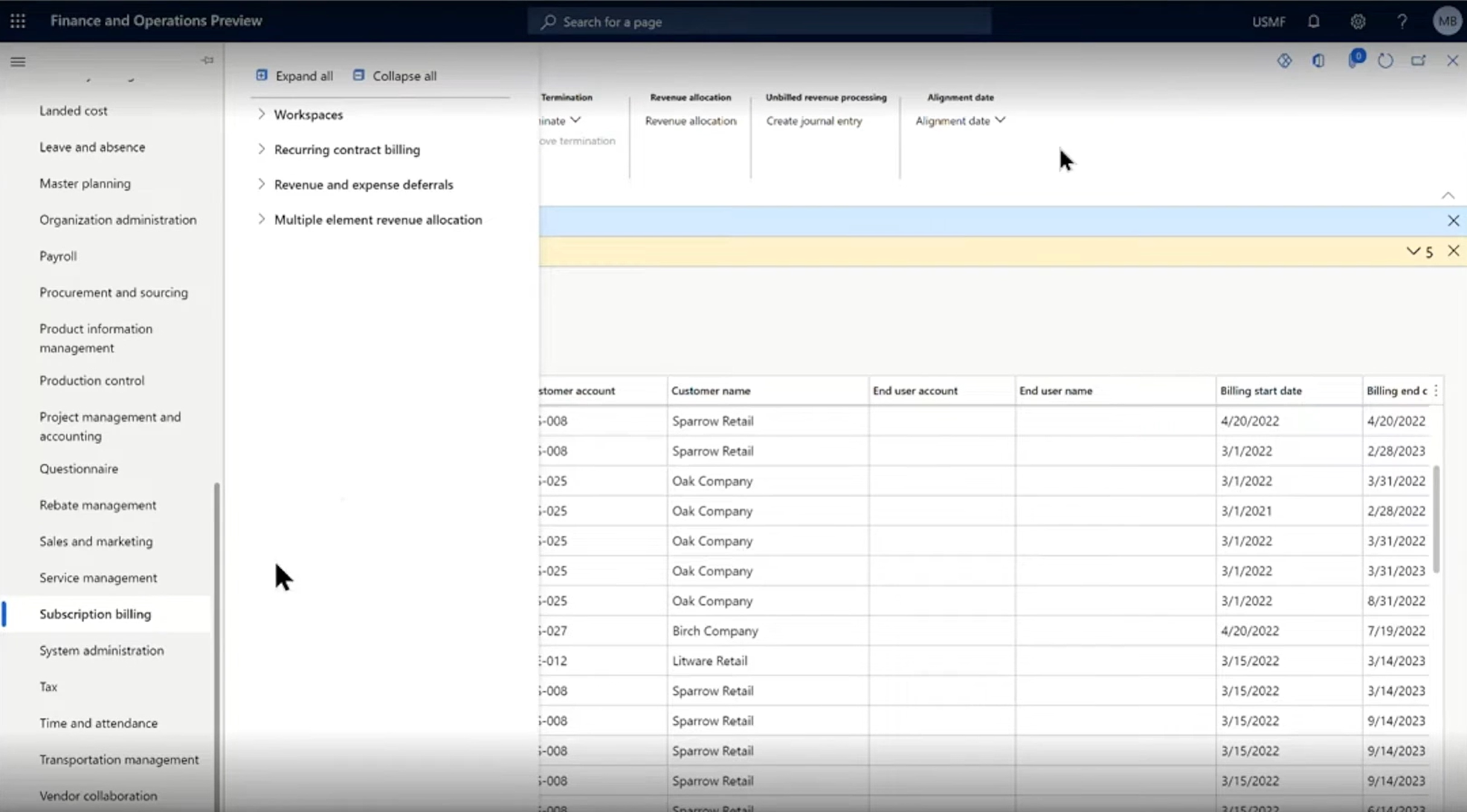
Subscription billing receives one preview feature that corrects multi-element revenue allocation logic when contracts are updated or terminated. Organizations using revenue allocation for bundled subscription contracts should test it in a sandbox before relying on it for revenue recognition.
Electronic reporting and regulatory compliance
Electronic reporting (ER) receives several practical improvements, three of which are on by default.
Key updates include:
- Native GS1 barcodes: ER can now generate GS1-128, GS1 DataMatrix, and GS1 QR Code barcodes directly from its barcode data source. GS1 standards are widely used in retail, warehousing, transportation, and healthcare labeling.
- New DIV and MOD formula functions: Integer division and remainder functions are now part of the ER formula language, supporting scenarios such as pagination, packaging quantities, and check-digit calculations.
- Print management copy counts: ER destinations now honor the number of copies configured in Print management and in ad hoc print dialogs. Organizations that set copy counts in Print management but previously received single ER outputs should confirm that print volumes match expectations after the update.
- Lower memory consumption for large ER runs: Engine-level optimizations reduce peak memory use during large ER executions.
- Enhanced validation management: Administrators can validate multiple ER configuration versions in one operation, with version-level tracking and a persistent validation history.
On the regulatory side, Finance adds support for electronic reporting of transactions in France. This e-reporting requirement is part of France’s broader electronic invoicing reform and requires companies to report specific transaction data to French tax authorities through an approved intermediary platform. It is enabled through Feature management.
Dynamics 365 Supply Chain Management
Procurement and supplier collaboration
Procurement updates in this release extend both supplier-facing collaboration and internal financial classification.
Key updates include:
- Supplier Engagement (preview): Microsoft’s new supplier collaboration workspace, built on Power Platform, is available in version 10.0.49 through Feature management as a preview. Dynamics101 covered its scope and architecture when Microsoft opened the public preview of Supplier Engagement, including supplier onboarding, global vendor management across legal entities, and a Power Pages supplier portal.
- Financial tags in procurement documents: Financial tags can now be used in procurement documents, extending transaction classification further into the purchase-to-pay process.
- RFQ bid-driven fixed asset field updates: On by default, this change allows fixed asset field updates to be driven from request for quotation bids.
- Establishment synchronization for direct delivery: A new purchasing parameter and prompt let organizations control whether establishments stay synchronized between linked sales and purchase orders in a direct delivery chain.
Master planning and Planning Optimization
Planning Optimization receives three new features, and three planning features introduced as previews in version 10.0.48 are now generally available.
Key updates include:
- Closed-for-pickup policy on transport calendars: Planning Optimization can now respect pickup availability on transport calendars when generating planned transfer orders.
- Sub-BOMs and sub-routes in forecast reduction: Supply and demand forecast reduction can now take sub-BOMs and sub-routes into account.
- Coverage time fence filtering: Derived requirements can be filtered by coverage time fence, helping planners limit the planning horizon for dependent demand.
Production control and quality management
Manufacturers receive a mix of new controls, scalability improvements, and quality features that move to default or mandatory status.
Key updates include:
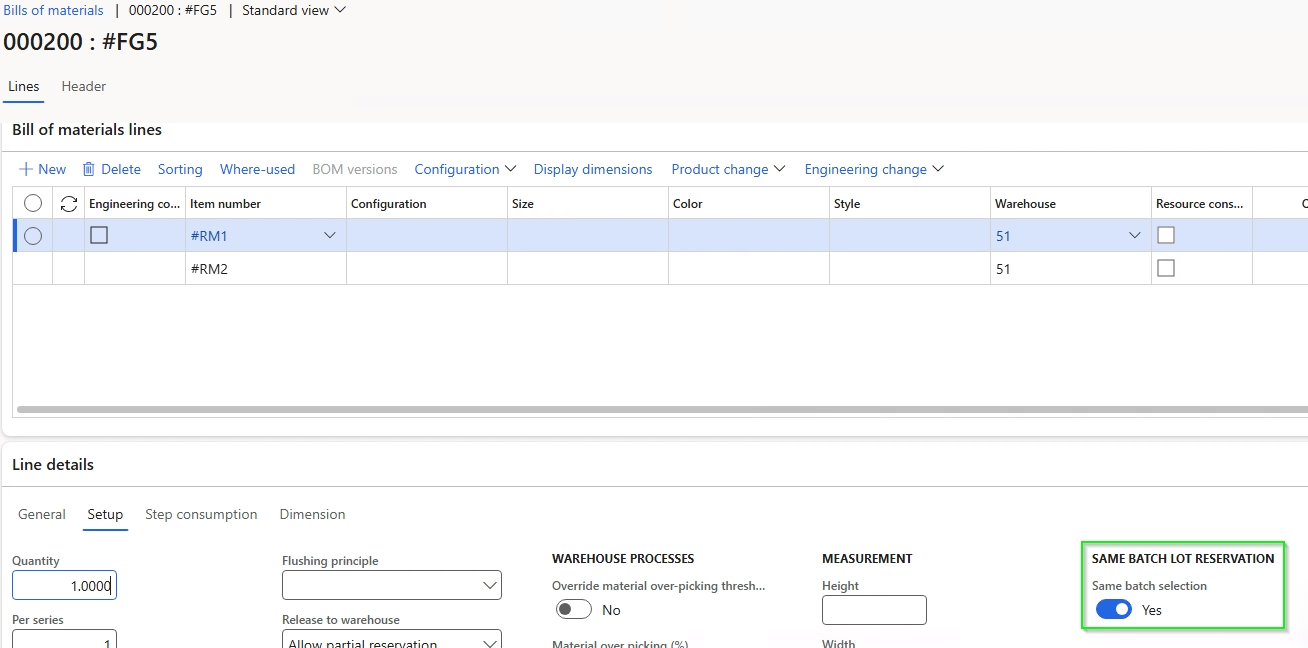
- Same-batch selection for raw materials (preview): Production and batch orders can enforce the use of a single batch for raw materials, a requirement common in process manufacturing and regulated industries.
- Locked shop floor registrations: Once daily time registrations are calculated, workers can no longer clock in, clock out, or start and stop jobs for that day. Supervisors can reverse the calculation for an affected worker if a correction is needed.
- Batch auto-scale for message processor queues: When batch auto-scale is enabled, message processor queues can use capacity beyond a single batch server, with priority-based scheduling and concurrency controls.
- Rich text for CAPA cases: Corrective and preventive action (CAPA) case logs now support a formatted note editor.
Quality management sees significant status changes. Acceptance sampling, sample management, quality associations by product dimensions, and calibration tools for test instruments are now turned on by default, while Advanced quality management and Dispense management become mandatory.
Warehouse management and inventory
Warehouse management continues to receive a large share of Supply Chain Management investment, with several features enabled by default from the start.
Key updates include:
- Optimized 3D packing (production-ready preview): A new containerization algorithm optimizes how items are packed into containers in three dimensions.
- Dynamic work classification now on by default: This capability, which allows warehouse work classification rules to be defined with low-code logic, moves directly from production-ready preview to on by default.
- Packing station container conversion: Work containers can be converted into packing station containers.
- Inbound ASNs as despatch advice messages: Inbound advance shipping notices can be imported as despatch advice messages.
- Single-owner warehouse locations: Organizations can prevent inventory from multiple owners from being stored in the same warehouse location.
- Source system inventory status mapping: Inventory statuses can be mapped when exchanging data with an external source system in warehouse management only deployments.
- Optimized inventory transaction consolidation (preview): A new approach to consolidating inventory transactions is available for testing.
Four Inventory Visibility integration features also become mandatory in this release, covering available-to-promise, reservation offsets, transaction integration, and support for warehouse-enabled items.
Sales, pricing, rebates, and asset management
The remaining updates touch pricing, rebate management, and asset management.
Key updates include:
- Unified pricing management change tracking: Changes to global pricing rules, discounts, and trade agreements are now tracked automatically so Azure Product Search can be notified of price changes.
- External item identifier search becomes mandatory: Lookup-based search on the external item identifier field for sales orders moves directly from preview to mandatory.
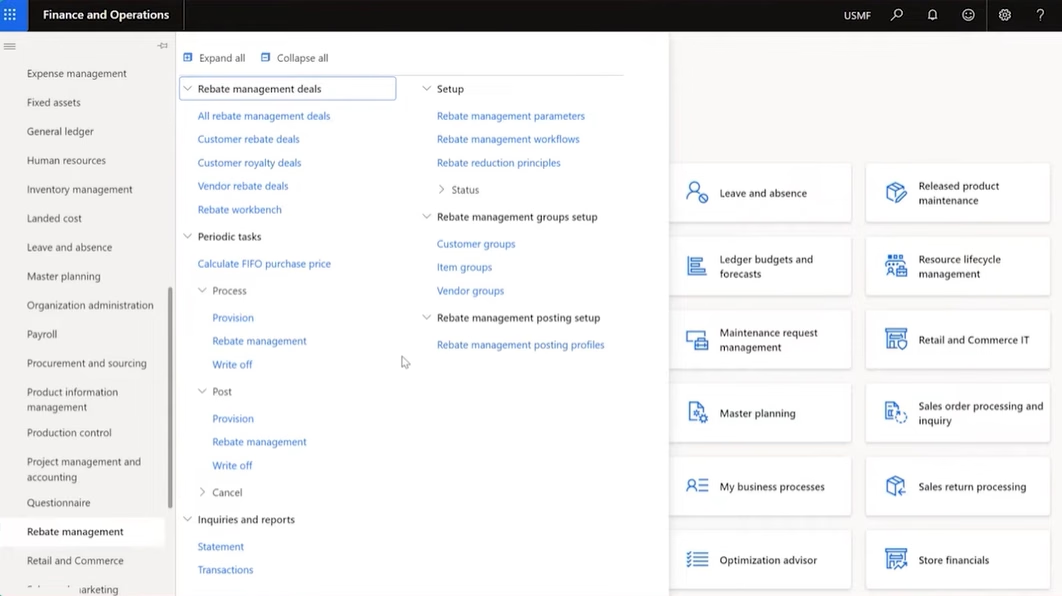
- Vendor rebate features become mandatory: Consolidating vendor invoices for the same vendor in rebate deals and posting vendor rebate outputs to purchase order vendors can no longer be turned off.
- Asset management changes: Adding maintenance checklist template lines to work order lines and recording remarks on lifecycle state changes are now on by default, while aggregated material availability checks and credit limit checks on work order dispatch become mandatory.
Twelve Supply Chain Management features are also removed from Feature management and are now a permanent part of the product, including two features that support quote-to-cash integration with Dynamics 365 Sales.
What version 10.0.49 means for Finance & Operations customers
Version 10.0.49 is an incremental update rather than a headline release, but it still requires attention from existing customers. Features that become mandatory, including several in Inventory Visibility and quality management, can no longer be kept disabled, so teams with customizations or extensions in those areas should regression test them before the update reaches production. The release also shows where Microsoft is concentrating its investment, with budgeting changes aimed at budget-controlled and public sector organizations, ER and France e-reporting updates supporting global compliance, and Supplier Engagement pointing toward Power Platform-based collaboration around the ERP.
Teams expecting a Dynamics 365 Finance & Operations 2026 release wave 2 plan should instead look to service updates such as version 10.0.49 for what has arrived and to the AI at Work roadmap for what is coming next, which means pairing regular update testing with more frequent roadmap reviews.
Planning for the Dynamics 365 Finance & Operations fall 2026 update
Version 10.0.49 brings useful improvements, but its biggest impact for many organizations will come from features that are now on by default or mandatory, so teams should review those changes and validate key processes in a sandbox before the update reaches production. Microsoft’s full change lists for Dynamics 365 Finance 10.0.49 and Dynamics 365 Supply Chain Management 10.0.49 are a useful starting point, and an experienced Dynamics 365 Finance and Operations partner can help prioritize testing and adoption.
Keep checking back with Dynamics101 for the latest news, independent analysis, and expert perspective across the Microsoft Dynamics and Power Platform ecosystem.

