
Rental Management brings native fleet and billing processes to Supply Chain Management, Field Service, and Commerce
Microsoft has announced the public preview of Rental Management in Dynamics 365 Supply Chain Management. The native capability runs equipment rental from the first availability check through contracts, fleet movements, returns, and billing. The November 2026 announcement, written by Georg Glantschnig, Corporate Vice President of AI ERP, also introduced new rental capabilities in Dynamics 365 Field Service and Dynamics 365 Commerce. The goal is for rental activity to share the same asset, customer, and financial data as the rest of the business.
The release matters because rental has historically been one of the clearest gaps in Microsoft’s standard ERP functionality. Equipment manufacturers, dealers, and rental companies on Dynamics 365 have typically relied on ISV add-ons or separate systems to manage fleets, rates, and rental billing. By building those processes into the core product, Microsoft is positioning Dynamics 365 for what it calls Asset-as-a-Service models. In these models, the same machine may be sold, rented, serviced, and resold over its life.
What is Dynamics 365 Rental Management?
Rental Management is a new module in Dynamics 365 Finance and Supply Chain Management, formerly known as Dynamics 365 Finance & Operations. It handles the operational and financial side of renting equipment. Microsoft describes it as a connected foundation rather than a standalone rental application. Rental transactions post directly to the general ledger, fixed assets, and accounts receivable in Dynamics 365 Finance. It also links to Field Service, Project Operations, and Commerce, so a single fleet item can carry its rental, service, and sales history across applications.
The preview supports three types of fleet items: prime equipment, attachments, and bulk items. Microsoft’s preview documentation shows it also covers re-rents, which are units sourced from a third party and rented on to customers. Other supported scenarios include swaps and substitutions, stand-down credits, dynamic pricing, and selling fleet items out of the rental fleet.
Microsoft acknowledges that rental operations vary widely, from short-term equipment hire to long-term leases and specialty rental. The company says organizations can extend Rental Management with partner solutions for industry-specific requirements. That signals Microsoft sees the module as a standard core rather than a replacement for every vertical rental product. Microsoft has not yet said how Rental Management will be licensed or whether it will be included in existing Dynamics 365 Supply Chain Management licensing and pricing.
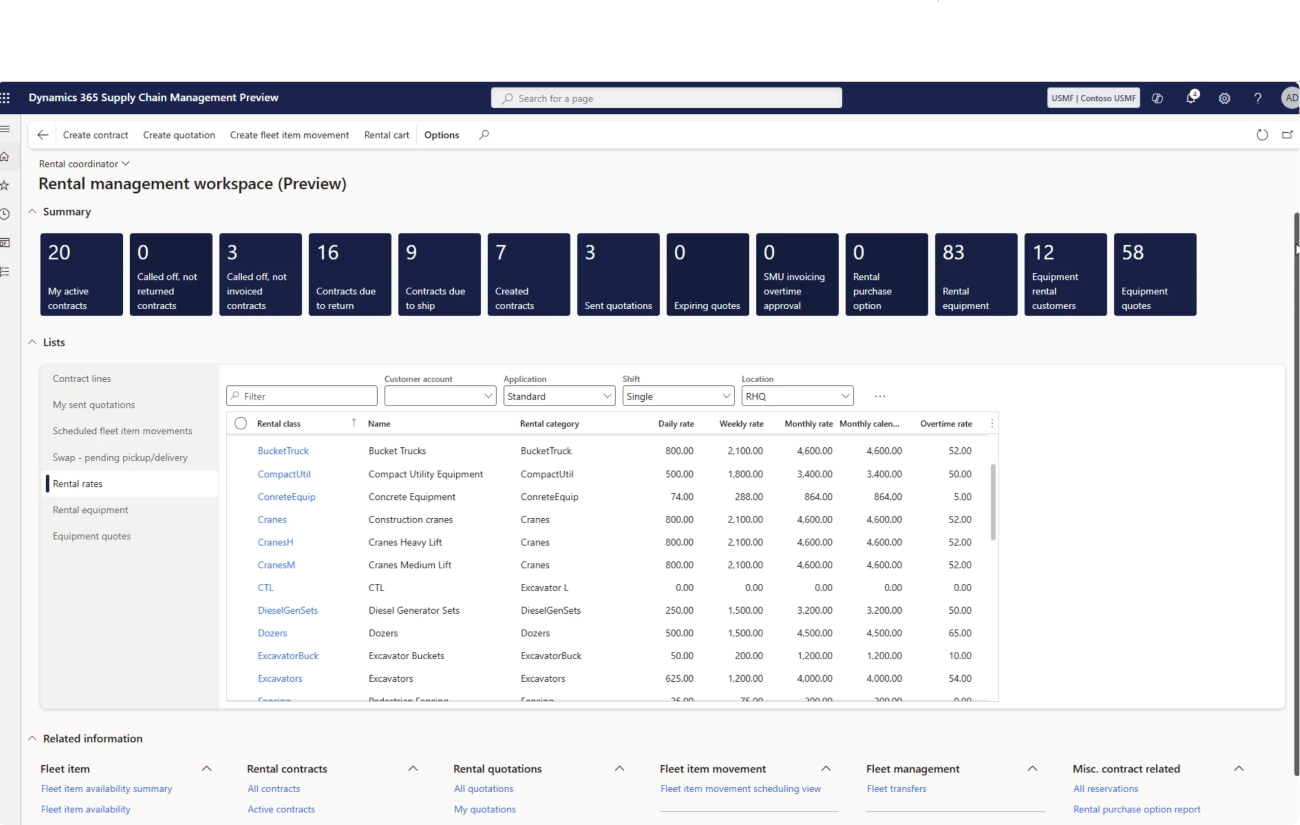
Key features of Rental Management in Dynamics 365 Supply Chain Management
The public preview covers the core rental lifecycle, from the first customer inquiry through reservation, fulfillment, return, and billing. Microsoft has organized the capabilities around four areas that rental businesses often manage in separate systems today. These are quoting and contracts, fleet operations, billing and finance, and the long-term lifecycle of each asset.
Availability, quoting, and rental contracts
Rental coordinators can check fleet item availability, reserve equipment, and build quotations from rental rates using a guided rental cart. Quotations can then become rental contracts. These can include a rental purchase option for customers who want to buy a unit at the end of the term.
Pricing gets particular attention in the preview. Suggested rates can adjust based on inventory levels, utilization, reservations, and customer history. Discount override limits are designed to keep coordinators from eroding margins on individual deals. A dedicated rental management workspace also gives coordinators a single view of active contracts, sent quotations, scheduled fleet item movements, and units due back.
Fleet movements, inspections, and returns
Once equipment is out on rent, fleet item movements record each shipment and return. Those records can include inspection checklists, photos, and damage tracking, giving rental teams documented evidence of equipment condition. When a customer is finished with a unit, a call-off stops rental charges. A return-to-ready process then helps get the unit back into rentable condition more quickly. Coordinators can also swap units at a job site and transfer equipment between locations as demand shifts.
Rental billing and financial integration
Rental invoices follow the billing cycle defined in the rental template. At contract close, a best rate calculation sets the rate for the actual rental duration before overtime or other charges are applied. Because rental transactions post to standard Dynamics 365 Finance processes, rental revenue and revenue-based depreciation flow through the general ledger and fixed assets. Fleet utilization can also be tracked down to the individual unit.
For finance teams, this is arguably the most significant part of the release. Reconciling rental revenue, fixed asset depreciation, and customer billing across disconnected systems is a common source of period-end friction. Native posting removes one of those integration points.
Asset lifecycle from rental fleet to customer fleet
Rental Management models a fleet item’s full lifecycle. A unit moves from new inventory into the rental fleet, where it is tracked as a fixed asset. It then moves into a used fleet when it is marketed for sale, and into a customer fleet once it is sold. Service can continue after the ownership change, which supports dealers and manufacturers that sell equipment and then maintain it for the buyer.
New rental capabilities in Dynamics 365 Field Service and Commerce
Rental profitability depends on more than the rental contract itself. Equipment needs to be inspected, repaired, and maintained between rentals, and rental customers often buy parts and supplies at the same time. Microsoft is extending rental into Dynamics 365 Field Service and Dynamics 365 Commerce. As a result, service work and counter sales run against the same fleet and customer data as the rental process.
Field Service maintenance and work order requests
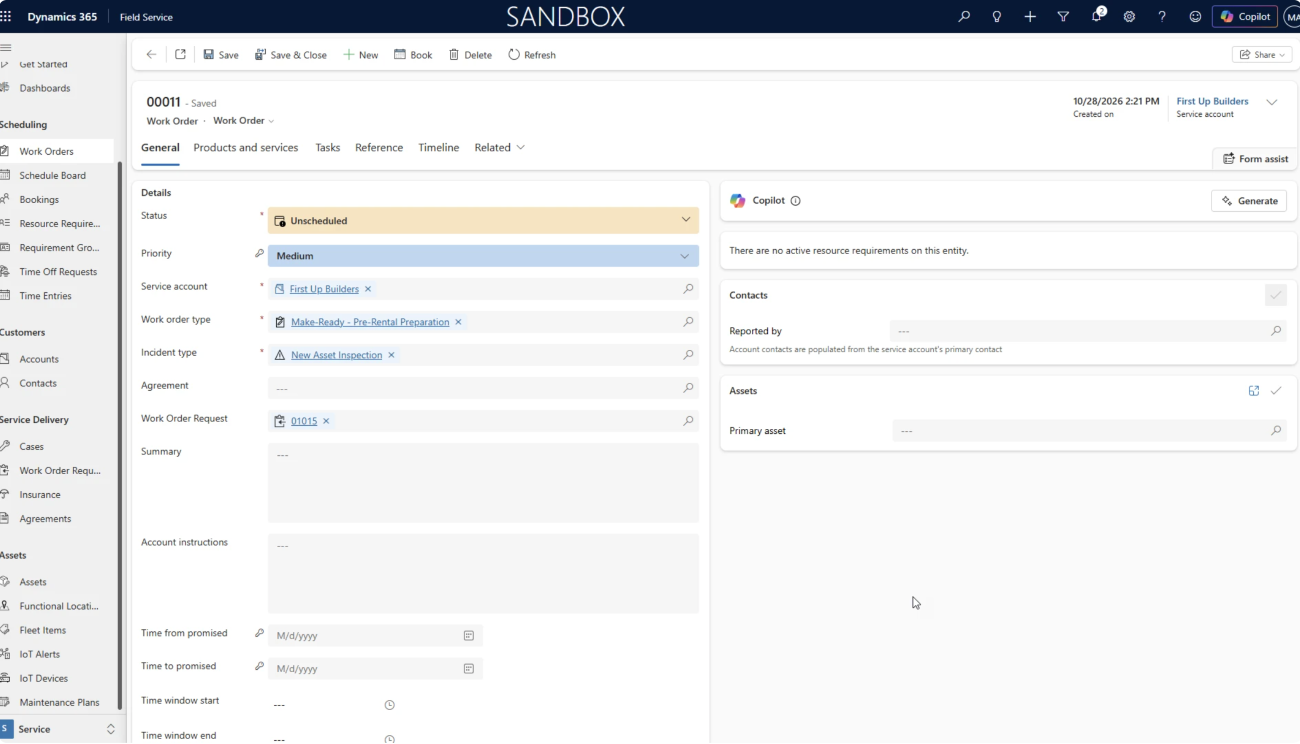
The Field Service side of the release connects rental operations with maintenance. Rental coordinators can send repair requests to Dynamics 365 Field Service directly from the rental process, and the resulting work orders retain the rental context. Rental fleet items can also be managed as serviceable assets in Field Service. Reusable preventive maintenance plans schedule work by calendar interval or actual usage, then generate work orders as maintenance comes due.
Microsoft’s roadmap describes a work order request process that lets teams review and approve service needs before committing technicians, parts, or schedule capacity. The roadmap notes the capability works with Field Service alone or with the combined Field Service and Project Operations solution. According to Microsoft’s preview documentation, organizations must first set up the rentals integration in Field Service. Only fleet items flagged as eligible for service appear as serviceable assets.
Trade Counter point of sale in Dynamics 365 Commerce
Microsoft is also tying rental to parts and supplies sales through Trade Counter point-of-sale capabilities in Dynamics 365 Commerce. Counter associates can build large orders for business accounts, check inventory across branches, and release orders to the warehouse for fulfillment. The practical scenario is a contractor who rents equipment for a project and buys consumables at the same branch. Both transactions run against the same customer record.
Microsoft’s announcement does not give a release status for the Field Service and Commerce capabilities beyond describing them as new rental features. Related items appear on Microsoft’s public roadmap as in development.
What Dynamics 365 Rental Management means for rental ISV solutions
Rental has long been a well-served ISV category in the Dynamics 365 Finance and Supply Chain Management ecosystem. A native module raises practical questions for customers already running one of those solutions.
Microsoft’s position is that Rental Management is a foundation partners can extend rather than a replacement for specialized products. Its December 2025 announcement said customers, ISVs, and partners could build on the capabilities with AI agents using MCP and Copilot Studio. The November 2026 announcement repeated that partner solutions can fill industry-specific gaps.
Analysis: For customers on an ISV rental solution, the near-term priority is technical compatibility. Because Microsoft’s rental functionality now sits in the standard product, confirm that your ISV has validated its current release against your planned Finance and Supply Chain Management version. Over the longer term, organizations will need to decide which rental processes belong in Microsoft’s standard module and which still require specialized vertical functionality.
Preparing for Dynamics 365 Rental Management general availability
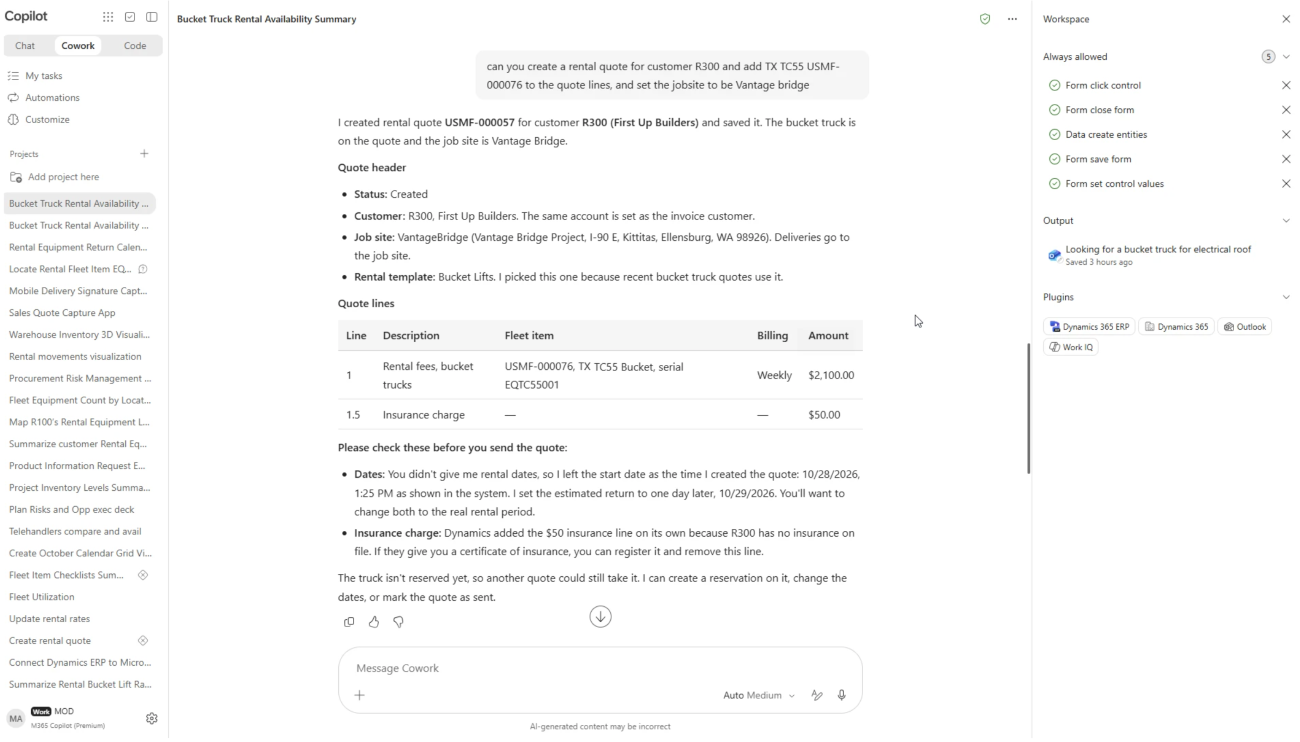
Rental Management moves rental from a partner-supplied add-on to a native process in Dynamics 365 Finance and Supply Chain Management. General availability is targeted for August 2027, and licensing has not yet been announced. In the meantime, rental businesses should test the module against their own processes in a sandbox and check how it interacts with any existing rental ISV solution. They should also map how rental revenue and fleet depreciation would flow through finance. An experienced Dynamics 365 Supply Chain Management implementation partner can help assess fit and plan the path from preview to production.
Keep checking back with Dynamics101 for the latest news, independent analysis, and expert perspective across the Microsoft Dynamics and Power Platform ecosystem.

